As global public health systems continue to face challenges from SARS-CoV-2, the ability to quickly and accurately identify infected individuals remains crucial for effective pandemic control. While traditional laboratory methods offer high precision, their lengthy processing times make them impractical for large-scale, immediate screening needs. In this context, SARS-CoV-2 antigen test kits based on colloidal gold technology have emerged as valuable complementary tools due to their rapid response capabilities.
I. Technical Core and Performance Metrics: A Data-Driven Reliability Assessment
The SARS-CoV-2 antigen test kit (colloidal gold method) utilizes gold nanoparticle-labeled antibodies to detect the viral nucleocapsid protein through immunochromatographic reaction. Designed for rapid qualitative testing without complex equipment, this method proves particularly suitable for primary healthcare facilities, public spaces, and home testing.
1.1 Core Detection Principle: Colloidal Gold Immunochromatography
This technology combines the colorimetric properties of colloidal gold with the specific binding principles of immunochromatography. When a sample (nasopharyngeal swab, oropharyngeal swab, nasal swab, or saliva) is applied, any present SARS-CoV-2 antigens bind with gold-labeled monoclonal antibodies, forming antigen-antibody complexes. These complexes migrate along the membrane until captured by immobilized antibodies at the test line (T), producing a visible purple-red band. A control line (C) serves as an internal quality check, appearing regardless of antigen presence.
1.2 Key Performance Parameters
-
Detection Time: 15-20 minutes - significantly faster than PCR tests, enabling early detection and isolation.
-
Shelf Life: 18 months - facilitates long-term storage for emergency preparedness.
-
Sample Types: Supports multiple collection methods (OP, NP, nasal swabs, saliva) for flexible use across populations.
-
Packaging Options: Available in 1T to 50T configurations for varied testing needs.
-
Storage: Room temperature (2-30°C) stability eliminates cold chain requirements.
II. Application Scenarios and Value Analysis
These rapid antigen tests demonstrate significant value across multiple settings:
2.1 Broad Applicability
-
Healthcare Facilities: Preliminary screening tool to relieve PCR testing pressure, particularly in emergency triage situations.
-
Public Spaces: Routine screening in airports, schools, and care facilities to prevent outbreaks.
-
Home Testing: Enables self-monitoring for symptomatic individuals or those with exposure risks.
2.2 Core Advantages
-
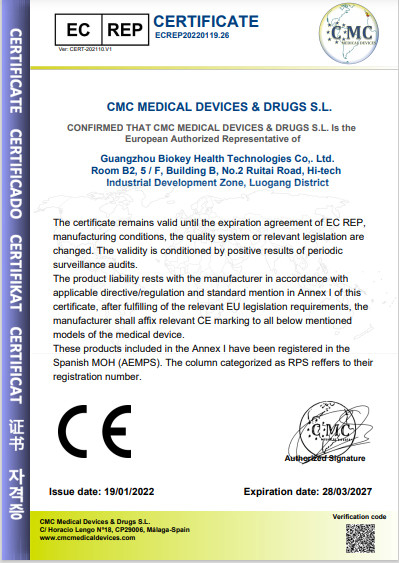
CE certification validates quality standards
-
Device-free operation with 20-minute results
-
Multiple sample type compatibility
-
Multilingual support for global deployment
III. Scientific Understanding of Test Mechanisms
3.1 Quantitative Analysis of Testing Process
The test's accuracy depends on: (1) antigen concentration and antibody affinity during initial binding, (2) migration efficiency influenced by sample viscosity and membrane properties, (3) T-line sensitivity determining detection threshold, and (4) C-line validation of proper test execution.
3.2 Result Interpretation
-
Positive: Both T and C lines appear (possible infection)
-
Negative: Only C line appears (no antigen detected, but doesn't rule out infection)
-
Invalid: Missing C line requires retesting
3.3 Accuracy Influencing Factors
Key variables include viral load, sampling quality, operator technique, and reagent quality. Proper sampling from virus-rich areas (e.g., nasopharynx) proves critical for reliable results.
IV. Conclusion: The Data Analyst's Perspective
Colloidal gold-based antigen tests serve as vital pandemic response tools through their speed, accessibility, and cost-effectiveness. While not replacing PCR's precision, they effectively supplement testing strategies for mass screening and early detection. Future technological advancements may enhance their sensitivity and specificity, potentially integrating with other diagnostic methods for comprehensive viral surveillance systems.


 Your message must be between 20-3,000 characters!
 English